Post-Acne Marks — Why Do They Fade Quickly for Some People but Last Longer for Others?
Post-Acne Marks — Why Do They Fade Quickly for Some People but Last Longer for Others? Practical guidance and realistic next steps from DIVA Skin Clinic Poipet.

Post-acne marks make many clients feel that their skin is still not clear even after acne has improved. Some people are left with only a few light brown spots that gradually fade over time. Others develop darker areas that persist for many months, especially after inflammatory acne, self-extraction, or treatment performed before the skin was stable.
Post-acne marks are commonly post-inflammatory hyperpigmentation. When the skin is inflamed or injured, pigment production can increase in that area. Marks may range from red, to light brown, to dark brown, depending on the skin foundation, degree of inflammation, depth of injury, and later care.
- The degree of inflammation partly determines the depth of the mark
A small acne lesion that is not heavily manipulated usually leaves a lighter mark. Deep, painful, prolonged inflammatory acne or acne that is forcefully squeezed can create greater injury and increase the risk of long-lasting pigmentation.
This is why controlling inflammation early is as important as treating marks later. If the focus is only on brightening while new acne continues to form, the skin will keep developing new dark areas.
- Self-extraction increases the risk of dark marks and scars
When clients try to force out acne contents that are not ready, surrounding tissue can be injured. The skin surface may become red, scratched, ooze, or form a scab. The area can then darken more easily.
Picking scabs after laser, peel, or acne extraction can also prolong healing and increase the risk of dark marks. Do not remove scabs, do not rub, and protect the skin from sunlight; these are very important steps.
- Sunlight makes pigmentation darker and longer-lasting
Skin after inflammation is more sensitive to light. Without consistent sun protection, dark marks can become deeper or more difficult to fade.

Sun protection is not only applying a product once in the morning. Clients also need to limit intense sun exposure, use physical protection, and apply a sufficient amount. Night-shift workers also need to be aware because they may still be exposed to light when travelling in the morning or afternoon.
- Not every red mark is brown pigmentation
After acne, some people mainly have red marks caused by blood vessels and residual inflammation. Others have brown marks due to increased pigmentation. The two conditions can coexist, but their support directions are not entirely the same.
If every post-acne mark is viewed in the same way and only brightening products are used, results may not meet expectations. It is necessary to identify red marks, brown pigmentation, depressed scars, or lesions that are still inflamed.
- Brightening active ingredients need to be used at the right time
Tranexamic acid, vitamin C, alpha arbutin, niacinamide, azelaic acid, or retinoids may support appropriate cases. However, skin that has just undergone a peel or laser, or is already irritated, should not rush to use too many active ingredients.
In the early stage, recovery and sun protection need to be prioritised. Once the skin is more stable, pigmentation-support products can be increased gradually. Using them too early can cause redness, stinging, and a more prolonged condition.

- Pico, peel, and mesotherapy do not replace sun protection
Pico laser, gentle peels, or supportive brightening methods can help improve pigmentation. However, if clients do not protect their skin and continue to create new injuries, results will not last.
No technology can bypass controlling inflammation, recovery, and home care.
- Dark marks need to be distinguished from melasma or deep pigmentation
Some clients call every dark area a post-acne mark. However, pigmentation may relate to melasma, freckles, sun exposure, or another condition. If the target is diagnosed incorrectly, the chosen method can also be incorrect.
DIVA’s Perspective
At DIVA, managing dark marks does not begin with aggressive brightening. The first step is to check whether there is still inflammatory acne, whether the skin barrier is stable, and whether the marks present are red, brown, or scars.

If acne is still forming, acne needs to be controlled at the same time. If the skin is weakened, it needs recovery first. Only when the skin is sufficiently stable should Pico, peel, mesotherapy, or appropriate home-care active ingredients be considered.
The realistic objective is to allow pigmentation to fade gradually, create a more even tone, and limit new marks. Improvement time differs for each person, and complete clearance after a single session should not be promised.
Conclusion
Persistent post-acne marks are not caused only by the absence of one brightening product. They are related to the degree of inflammation, self-extraction habits, sunlight, the skin foundation, and care after injury.
To improve them well, it is necessary to control new acne, restore the skin, use sun protection, and apply brightening methods at the right time. Stronger is not always faster; what matters is that the skin is stable enough to respond.

Skin Concerns & Root Causes
A deep, plain-language guide to the skin concerns DIVA Skin Clinic Poipet treats — acne, dark spots, scars, melasma, por
Open→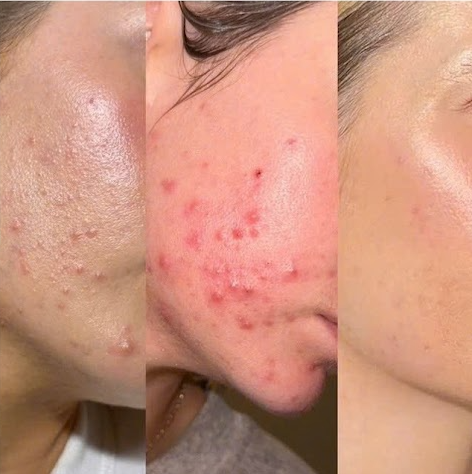
Acne — Why Is Treatment More Than Acne Extraction?
Acne — Why Is Treatment More Than Acne Extraction? DIVA Poipet explains Closed comedones are not the same and Oily skin
Open→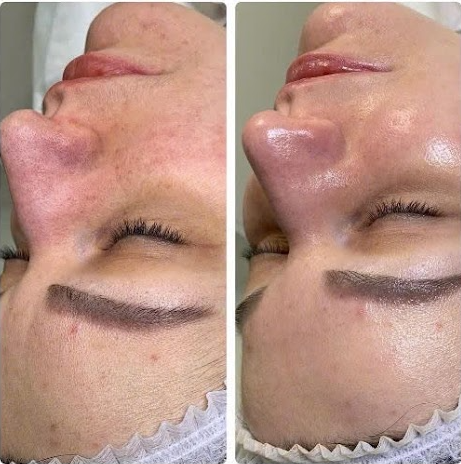
Acne Scars — Why Can One Method Not Treat Every Type?
Acne Scars — Why Can One Method Not Treat Every Type? DIVA Poipet explains Scars form when acne inflammation and Tethere
Open→
Melasma — Why Does It Recur Easily and Why Should Treatment Not Rely on Laser Alone?
Melasma — Why Does It Recur Easily and Why Should Treatment Not Rely on Laser Alone? Practical guidance and realistic ne
Open→