Acne Scars — Why Can One Method Not Treat Every Type?
Acne Scars — Why Can One Method Not Treat Every Type? DIVA Poipet explains Scars form when acne inflammation and Tethered scars need tissue release.
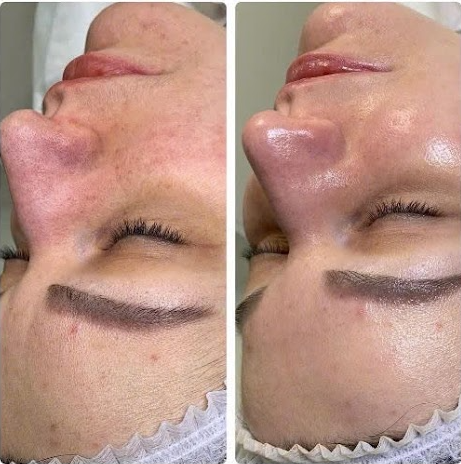
Clients often use the general term “pitted scars” for acne scars, but in reality there are many different scar types. There may be shallow scars, rolling scars, boxcar scars, ice-pick scars, tethered scars, or several types on the same face. Because their structures differ, one single method is unlikely to treat all of them well.
Many clients come to a clinic asking for CO₂, RF Microneedling, or subcision after seeing results online. However, what matters is not which technology is more famous, but whether the method acts on the part of the structure that is causing the depression.
- Scars form when acne inflammation damages the dermis
When deep inflammatory acne destroys tissue and healing does not create enough collagen, the skin surface can become depressed. Forceful self-extraction, prolonged inflammation, and unsuitable management can increase this risk.
Long-standing scars cannot be “removed” like acne contents. Treatment needs to restart the tissue-remodelling process, which commonly requires multiple sessions and recovery time.
- Tethered scars need tissue release first or in combination
Some depressions are pulled downward by fibrous bands beneath the skin. If treatment acts only on the surface, the skin may become smoother but the depth of the depression may not change much.
In suitable cases, subcision may be considered to release the tethered tissue. It can then be combined with CO₂ Fractional, RF Microneedling, PRP, or another regenerative method depending on the condition.
- CO₂ Fractional focuses on surface regeneration
CO₂ Fractional creates controlled micro-points of impact to stimulate renewal and collagen. This method is commonly discussed for pitted scars, pores, and rough skin texture.
However, CO₂ has downtime, carries a risk of prolonged redness and post-inflammatory hyperpigmentation, and requires serious care. Skin that is inflamed, sensitive, or has a weakened barrier may not be suitable to treat immediately.
- RF Microneedling works through needles and RF energy
RF Microneedling places needles into the skin and releases energy at a selected depth. In some cases, it can support texture, scars, and firmness.
It is not an “absolutely safe” version of CO₂. There can still be risks of swelling, redness, needle marks, pigmentation, or unwanted reactions if the settings and timing are unsuitable.
- PRP and skin boosters mainly have supportive roles
PRP uses components from a person’s own blood and is often combined to support tissue healing. Skin boosters can improve hydration and skin quality. However, these methods do not independently release tethered tissue or replace deep regenerative impact when scars have a clear structural component.
Clients need to understand that “more glowing skin” does not mean deep scars have been treated.

- Scars cannot be assessed from one photograph alone
Lighting, camera angle, and facial expression can make scars appear shallower or deeper. An in-person assessment helps observe tethering, depth, scar type, skin thickness, oiliness, and remaining inflammation.
Online photos can support an initial consultation but should not be used to finalise an entire treatment plan.
- Scar treatment needs spacing and recovery
Collagen needs time to remodel. Performing treatment too frequently or continuously increasing intensity does not ensure faster results. Instead, the skin may remain inflamed, develop pigmentation, or recover poorly.
Home care after procedures needs to be simple: gentle cleansing, recovery care, sunscreen, and avoiding self-removal of scabs. Strong active ingredients should return only when the skin is stable.
- Expectations need to be based on the degree of improvement
Not every scar can become completely flat. A realistic objective is usually to reduce depth, make the surface more even, and improve skin quality in stages.
DIVA’s Perspective
At DIVA, scar treatment is not decided only by a device name. The main scar type, degree of tethering, current acne condition, recovery capacity, and the downtime the client can accept need to be identified.
Some cases need acne control first. Some need subcision in combination. Some are suitable for CO₂, RF Microneedling, PRP, or supportive skin booster treatment. One session can focus on one main intervention rather than doing everything at once.
Conclusion
Acne scars are a structural concern, not only an uneven skin surface. One method has difficulty treating every scar type because each has a different depth and mechanism.
Good treatment requires accurate assessment of the scar type, selection of a suitable level of impact, respect for recovery time, and expectations based on realistic improvement.
Skin Concerns & Root Causes
A deep, plain-language guide to the skin concerns DIVA Skin Clinic Poipet treats — acne, dark spots, scars, melasma, por
Open→
Acne — Why Is Treatment More Than Acne Extraction?
Acne — Why Is Treatment More Than Acne Extraction? DIVA Poipet explains Closed comedones are not the same and Oily skin
Open→
Post-Acne Marks — Why Do They Fade Quickly for Some People but Last Longer for Others?
Post-Acne Marks — Why Do They Fade Quickly for Some People but Last Longer for Others? Practical guidance and realistic
Open→
Melasma — Why Does It Recur Easily and Why Should Treatment Not Rely on Laser Alone?
Melasma — Why Does It Recur Easily and Why Should Treatment Not Rely on Laser Alone? Practical guidance and realistic ne
Open→