How Do DPL and IPL Differ in Skin Treatment?
How Do DPL and IPL Differ in Skin Treatment? DIVA Poipet explains Article 01 | Suggested URL and How is the mechanism understood?.

Introduction
Clients commonly group DPL and IPL together as light technologies because both emit multiple wavelengths rather than a single wavelength like laser. However, the two names are not completely synonymous. IPL is a broad concept of intense pulsed light, while DPL is often used to describe a narrower-spectrum filtered system intended to focus energy on a wavelength range suitable for the treatment objective. The practical difference is not only the device name, but also the filters, pulse quality, cooling capability, choice of settings, and the practitioner’s experience.
How is the mechanism understood?
Light from IPL or DPL is absorbed by coloured targets in the skin, commonly melanin in pigmentation or haemoglobin in blood vessels. Light energy converts to controlled heat, which can support fading some uneven colour areas, reducing localised redness, or improving the surface in suitable indications. DPL is commonly positioned as having a narrower light spectrum, which may reduce unnecessary energy and focus more on a target. Nevertheless, a commercial name does not automatically guarantee results; device quality and operation remain major determinants of safety.
Which concerns may DPL and IPL suit?
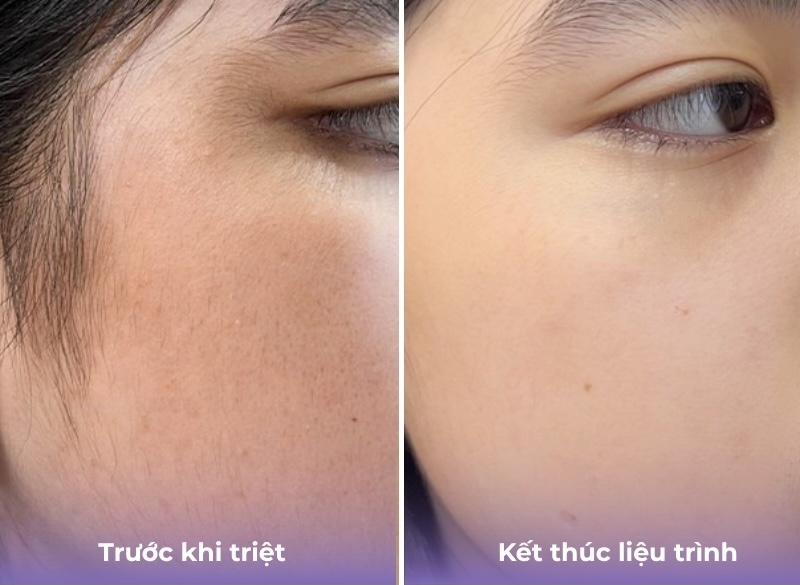
The two technologies may be considered for uneven skin tone, superficial brown spots, mild redness, small visible vessels, post-acne marks, and some surface-rejuvenation needs. For hair removal, IPL is also commonly used when hair colour and skin colour are suitable. However, the same outward sign can arise from different causes. Redness from skin-barrier irritation should not be managed in the same way as redness from visible vessels; a brown patch due to melasma also differs from a brown sunspot. For this reason, the service name alone is not enough to make a decision.
Important practical differences

DPL commonly emphasises selective light-spectrum filtering, while traditional IPL has a broader spectrum and depends more on filters. A narrow spectrum may help focus on a target, but it does not mean it is always stronger or always better. A high-quality IPL system with an appropriate filter and pulse can still be effective and safe. Conversely, a device marketed as DPL but with poor pulse control can still carry a risk of burns or pigmentation. DIVA evaluates technology by control capability and suitability for the skin foundation, not only by its name.
How does DIVA choose a method?
Before considering light treatment, DIVA assesses baseline skin tone, sensitivity, inflammation, pigment depth, vascular signs, and prior treatment history. Skin that is recently irritated, peeling, using sensitivity-increasing products, or has deep pigmentation of unclear origin may not be suitable to begin. In many cases, the first objective is stabilising the skin foundation rather than trying to address colour immediately. Once the skin is stable, light is introduced as part of a plan, either independently or in combination with another method in different sessions.
Realistic expectations
DPL and IPL can create visible change for some superficial and well-selected concerns, but they rarely resolve an entire concern in one session. Pigment spots may become temporarily darker before fading; red areas may reduce gradually rather than disappear immediately; the skin surface may look brighter but still need care to limit recurrence. Melasma, diffuse redness, or mixed concerns commonly need a longer plan. DIVA does not use extensive redness or strong burning as a measure of effectiveness because visible reaction does not equal better results.
Downtime and aftercare

After treatment, skin may feel warm, become mildly red, or be more sensitive for a short time. Some brown spots may darken before peeling or gradually fading. Care commonly prioritises gentle cleansing, suitable recovery moisturising, and avoiding self-added strong products. Protection from heat, friction, and excessive light is adjusted according to the client’s condition and environment. If pain increases, blistering, spreading redness, prolonged swelling, or unusual colour change occurs, clients need early contact for assessment rather than applying many products themselves.
Limitations and risks to understand
Risks of light technology include surface burns, blistering, increased or reduced pigmentation, prolonged irritation, and uneven results. Risk is greater with darker skin tone, active inflammation, a recent tan, or unsuitable settings. In addition, some deep pigmentation or skin conditions do not respond as advertising suggests. Online photographs are useful only for initial screening. DIVA does not allow a device to decide the method by itself and does not use the same settings for everyone. The objective is enough impact to create change while remaining within the skin’s capacity to recover.
Conclusion
DPL and IPL are both valuable light technologies when used for the correct objective. DPL is not a miracle version of IPL, and IPL is not outdated merely because it has a broader spectrum. What matters is understanding the skin’s actual concern, selecting a suitable system, controlling energy, and following the response after each session. At DIVA, the technology name is only one part of the decision. The plan always begins with the skin foundation and the client’s main objective, then selects appropriate light, laser, peel, or supportive methods.
Nguyen Hai Dang — Founder & Treatment Practitioner
Treatments & Technology
A deep, plain-language guide to the aesthetic technologies DIVA Skin Clinic Poipet uses — Pico laser, CO2 fractional, RF
Open→What Is Pico Laser? Mechanism, Indications, Limitations, Recovery, and Combination
What Is Pico Laser? Mechanism, Indications, Limitations, Recovery, and Combination. DIVA Poipet explains How Pico laser
Open→
CO₂ Fractional — When Is It Suitable for Scars, Pores, and Skin Texture?
CO₂ Fractional — When Is It Suitable for Scars, Pores, and Skin Texture? DIVA Poipet explains How CO₂ Fractional works a
Open→
RF Microneedling — Deep Treatment, but Not Every Skin Type Is Suitable
RF Microneedling — Deep Treatment, but Not Every Skin Type Is Suitable. DIVA Poipet explains How it works and Common ind
Open→