How Do Acne Peels and Pigmentation Peels Differ?
How Do Acne Peels and Pigmentation Peels Differ? DIVA Poipet explains Article 10 | Suggested URL and The objective of an acne peel.

Introduction
Acne peels and pigmentation peels both use chemical substances, but their objectives and selection are different. Acne peels commonly focus on oil, congestion, inflammation, and the cycle of comedone formation. Pigmentation peels focus on melanin distribution, the keratin layer, and factors creating uneven colour. One skin type can have both acne and dark marks, but attempting to treat both aggressively in the same session can increase inflammation. For this reason, DIVA identifies the priority concern and selects a suitable impact level rather than selling one general peel for every client.
The objective of an acne peel
An acne peel can support clearing congestion, reducing oil, improving the keratin layer, and reducing part of surface inflammation. Acid type and formula are selected according to acne type, inflammation level, and sensitivity. Closed comedones, blackheads, and oily skin need a different direction from deep inflammatory acne. A peel does not replace hormonal assessment, inflammation control, or home care. If a client only receives peels while pore-clogging products, friction habits, or baseline inflammation remain, acne can recur quickly.
The objective of a pigmentation peel
A pigmentation peel aims to even the keratin layer, support dispersion of superficial pigment, and improve the effectiveness of a brightening plan. However, pigmentation is not one single group. PIH, sunspots, melasma, and deep pigmentation have different mechanisms. A peel can be useful for surface pigmentation but can also worsen melasma or PIH if it creates inflammation. For this reason, skin tone, depth, and history of post-procedure darkening need consideration before selection.
Why should one formula not be used for both?

A strong formula intended to reduce congestion can make pigment-prone skin inflamed; a brightening formula does not necessarily control oil and acne. When many acids are mixed to address every objective, reactions become less predictable. DIVA prioritises one main objective and may add a light supportive step when needed. This does not mean treatment is slow; it reduces the risk of having to stop for a long time because of irritation. Stable results commonly come from many correct small decisions rather than one overloaded session.
How DIVA assesses priority
If skin has active inflammatory acne, the usual priority is reducing inflammation and limiting new lesions; dark marks are addressed once the skin foundation is more stable. If acne is controlled but PIH is clear, the plan can move toward pigmentation. For skin that is both congested and dull, a gentle peel may support both, but the main objective still needs identification. DIVA follows the reaction after each session to decide whether to maintain, reduce, or change the method rather than rigidly follow a fixed program.
Expected results
An acne peel can make the surface clearer, reduce oil, and help limit new lesions, but deep acne does not disappear immediately. A pigmentation peel can make the skin brighter and more even, but melasma or PIH commonly needs several methods and maintenance care. After a peel, pigmentation may darken temporarily or skin may peel mildly. DIVA does not promise a fixed number of sessions because the degree of concern, recovery capacity, and home habits strongly affect results.
Care after a peel
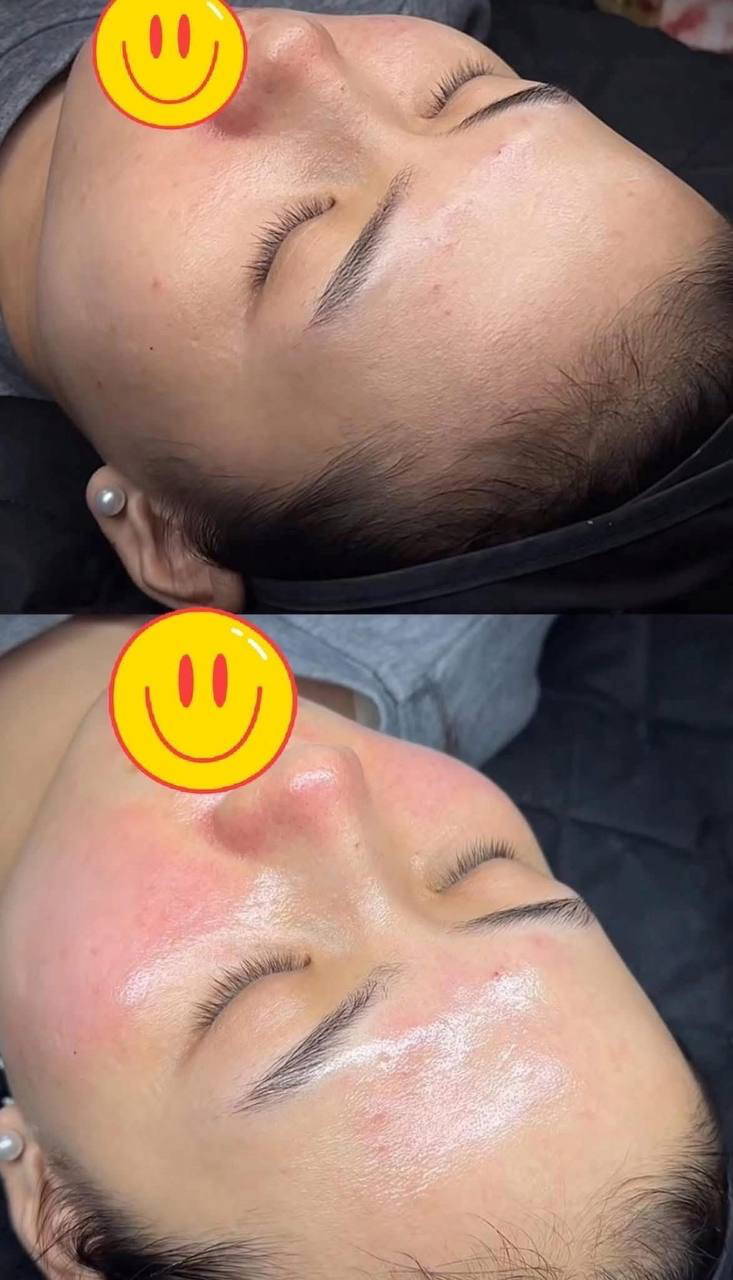
Both types of peel need minimal care as instructed, but priorities can differ. Acne-prone skin needs to avoid pore-clogging products and self-extraction; pigmentation-prone skin needs to reduce inflammation and limit colour triggers. Clients should not self-restart acids, retinoids, or strong serums merely because the skin has not peeled. If burning increases, redness spreads, blistering, pus, or progressive darkening occurs, contact is needed for assessment. Home care is the continuation of a peel session, not an optional part.
Limitations of peels
A peel cannot fully replace laser for selected pigmentation, RF or CO₂ for scars, injections for certain objectives, or medical treatment when acne is severe. Continuing to increase strength when there is no response can only damage the barrier. DIVA reassesses the cause when results are not as expected. Sometimes peeling needs to stop, skin needs recovery, or the direction needs to change. A good method needs to suit the concern, not be used only because a package has been purchased.
Conclusion
Acne peels and pigmentation peels differ in objective, formula selection, level of impact, and follow-up. The same client may need both at different stages, but not necessarily at the same time. DIVA begins with the concern that currently has the greatest impact and selects one suitable session. The plan is adjusted only after the skin’s real response is seen. This approach reduces risk and creates more sustainable results than trying to use one strong peel to resolve everything at once.
Nguyen Hai Dang — Founder & Treatment Practitioner
Treatments & Technology
A deep, plain-language guide to the aesthetic technologies DIVA Skin Clinic Poipet uses — Pico laser, CO2 fractional, RF
Open→
What Is Pico Laser? Mechanism, Indications, Limitations, Recovery, and Combination
What Is Pico Laser? Mechanism, Indications, Limitations, Recovery, and Combination. DIVA Poipet explains How Pico laser
Open→
CO₂ Fractional — When Is It Suitable for Scars, Pores, and Skin Texture?
CO₂ Fractional — When Is It Suitable for Scars, Pores, and Skin Texture? DIVA Poipet explains How CO₂ Fractional works a
Open→
RF Microneedling — Deep Treatment, but Not Every Skin Type Is Suitable
RF Microneedling — Deep Treatment, but Not Every Skin Type Is Suitable. DIVA Poipet explains How it works and Common ind
Open→