Exosomes in Aesthetics — Potential, Limitations, and What Needs Checking
Exosomes in Aesthetics — Potential, Limitations, and What Needs Checking. DIVA Poipet explains What are exosomes? and What objectives are exosomes used.
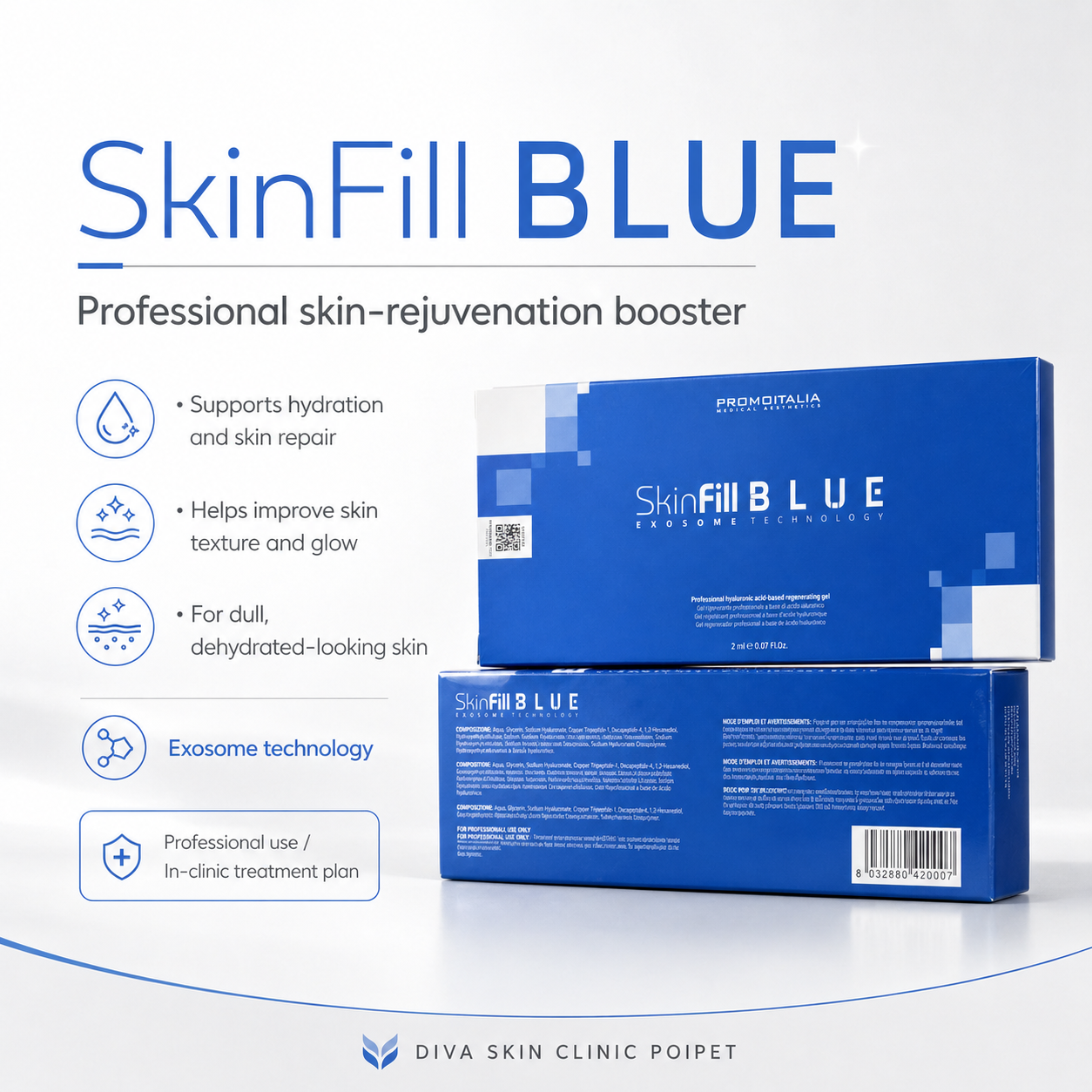
Exosomes are one of the most heavily promoted keywords in aesthetics. Much content describes exosomes as a solution for recovery, rejuvenation, reducing redness, improving scars, and brightening. However, clients need to distinguish between biological potential, real evidence, and how a product is used.
- What are exosomes?
Exosomes are very small extracellular vesicles released by cells that carry various signalling molecules. In research, they are of interest because of their role in cell-to-cell signalling and tissue-repair processes.
In aesthetic products, origin, purification method, concentration, stability, and storage conditions can differ. Seeing the word “exosome” on a package is not enough to assess quality.
- What objectives are exosomes used for?
In aesthetic practice, exosomes are often used after laser, microneedling, or procedures that create micro-injury, with the objective of supporting recovery, reducing redness, and improving skin quality.
Some providers apply them topically, some combine them with devices that deliver products, and some promote injection. Each route has different levels of invasiveness and different legal and sterility requirements.
- Evidence and limitations
Research on exosomes is developing, but not every commercial product has equivalent data. Results from one study of one type of exosome should not be applied to every product bottle on the market.
Exosomes do not replace subcision, CO₂, RF, or acne control. If they have a role, it is commonly to support recovery and tissue quality.
- What needs checking before use?
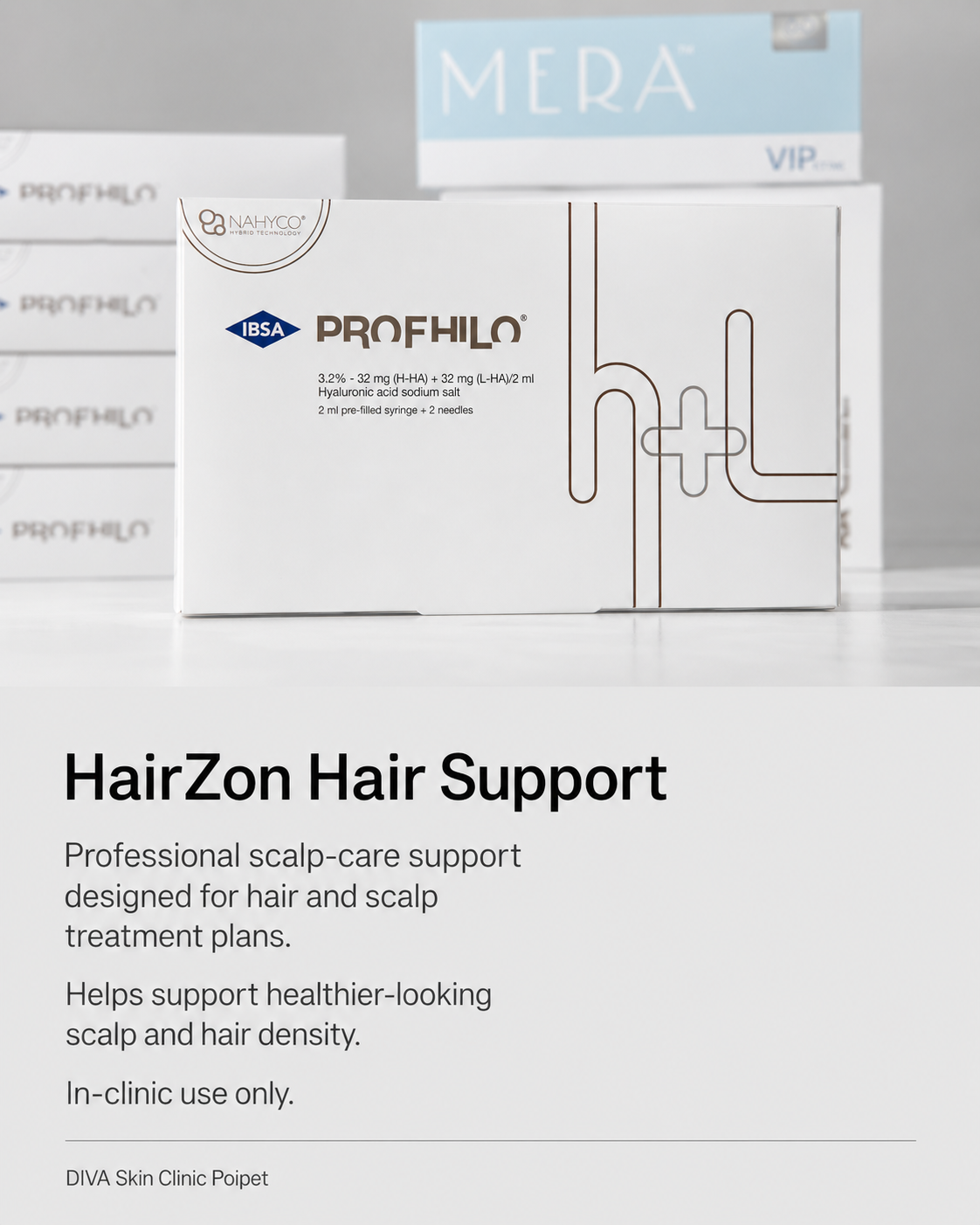
Clients should know what the product is, its origin, manufacturer, storage conditions, expiry date, and route of use. Products without clear labels, documentation, or with contents divided into unidentified vials need caution.
In particular, injection has a higher risk than topical use and needs separate legal and safety assessment. A product intended for topical use should not automatically be assumed suitable for injection.
- Risks
Risks can arise from contamination, inflammatory reactions, allergy, incorrect storage, or use by the wrong route. When combined with microneedling or laser, the skin barrier is more open, so sterility requirements are even higher.
If swelling and warmth, increasing pain, pus, rash, or a systemic reaction occurs after treatment, early assessment is needed.
- Is exosome needed for every laser session?
No. A basic recovery process of gentle cleansing, moisturising, and sun protection remains the foundation. Exosomes should be added only when there is a reason, the product is clear, and expected benefits are reasonable.
Adding exosome does not make an overly strong laser session safe. The initial treatment level still needs to be appropriate.
- DIVA’s Perspective
At DIVA, exosome is not considered a “miracle regeneration treatment.” Before use, the objective, product, route, and role in the plan need to be identified.
If a client has a main concern such as inflammatory acne, pigmentation, or scars, the main method still needs to address that concern correctly. Exosome can support only one part.
Conclusion
Exosomes are a field with potential, but are also easily marketed beyond the evidence. Clients should not make a decision only because of a new-technology keyword.
Real value lies in the specific product, method of use, storage conditions, sterility, and whether it is truly needed for the treatment objective.
Treatments & Technology
A deep, plain-language guide to the aesthetic technologies DIVA Skin Clinic Poipet uses — Pico laser, CO2 fractional, RF
Open→
What Is Pico Laser? Mechanism, Indications, Limitations, Recovery, and Combination
What Is Pico Laser? Mechanism, Indications, Limitations, Recovery, and Combination. DIVA Poipet explains How Pico laser
Open→
CO₂ Fractional — When Is It Suitable for Scars, Pores, and Skin Texture?
CO₂ Fractional — When Is It Suitable for Scars, Pores, and Skin Texture? DIVA Poipet explains How CO₂ Fractional works a
Open→
RF Microneedling — Deep Treatment, but Not Every Skin Type Is Suitable
RF Microneedling — Deep Treatment, but Not Every Skin Type Is Suitable. DIVA Poipet explains How it works and Common ind
Open→