Technology Update — How Do Pico, CO₂ Fractional, and RF Microneedling Differ?
Technology Update — How Do Pico, CO₂ Fractional, and RF Microneedling Differ? Practical guidance and realistic next steps from DIVA Skin Clinic Poipet.

Pico laser, CO₂ Fractional, and RF Microneedling are often promoted for the same group of concerns: acne scars, enlarged pores, rough skin texture, and pigmentation. As a result, clients can easily think that the three technologies can fully replace one another, or that they only need to choose whichever method is being promoted most heavily.
In reality, each technology affects the skin differently. Results depend not only on the device name, but also on the indication, settings, severity of the concern, technique, skin tone, recovery time, and post-treatment care.
- Pico is not only for pigmentation
Pico laser is commonly known for treating tattoos and pigmentation with very short pulses. However, with appropriate settings and treatment handpieces, Pico can also support improvement of the skin surface, pores, and some shallow acne scars.
An advantage clients often value is a relatively shorter downtime compared with some invasive resurfacing methods. However, Pico does not mean “no downtime,” and not every scar responds well.
If scars are deep, tethered, or have a complex surface structure, Pico alone may not be sufficient. In those cases, combination with RF Microneedling, CO₂ Fractional, subcision, or another method may need to be considered, depending on the condition.
- CO₂ Fractional creates a stronger effect on the surface and regeneration process
CO₂ Fractional creates controlled micro-columns of injury in the skin, thereby stimulating healing and restructuring. This method is often considered for acne scars, rough texture, fine lines, and some concerns requiring more noticeable regeneration.
In return, CO₂ commonly involves more visible redness, swelling, dryness, and peeling. The risk of post-inflammatory hyperpigmentation needs to be considered, especially for people whose skin is prone to pigmentation, who use sunscreen poorly, or who cannot follow proper care during recovery.
CO₂ should not be chosen only because a client wants a strong result. The level of treatment needs to suit the skin and the person’s ability to take downtime. Increasing energy does not always mean better results.
- RF Microneedling works through needles and radiofrequency energy
RF Microneedling delivers needles into the skin and releases RF energy at a controlled depth. This method is often used for texture, pores, acne scars, firmness, and some concerns related to sebaceous glands.
Compared with CO₂, RF Microneedling does not resurface the skin through the same mechanism, but it still creates micro-injuries and requires recovery time. Needle depth, energy level, number of passes, and treatment area all affect results and risks.
RF may be a suitable option in some cases for skin prone to post-inflammatory hyperpigmentation, but this does not mean it has no risk. Redness, swelling, pinpoint bleeding, dryness, acne flare-ups, or pigmentation can still occur.
- There is no single best technology for every acne scar
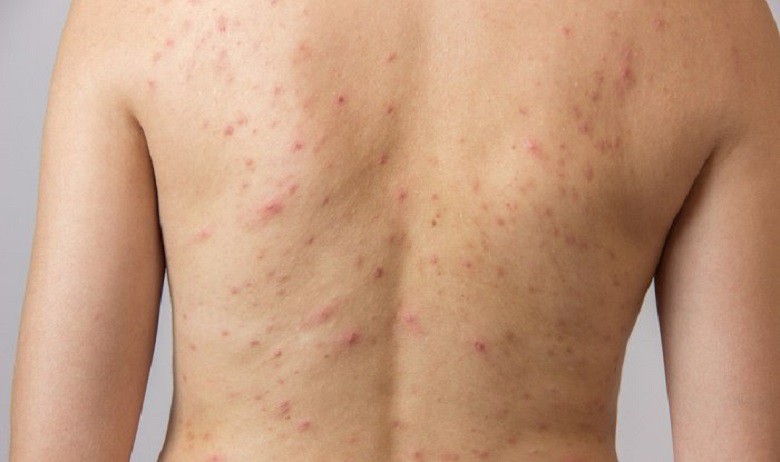
Acne scars include many different types. Ice-pick scars, boxcar scars, rolling scars, and tethered scars do not respond in the same way. One face can also have several scar types at the same time.

For this reason, research and clinical practice are increasingly interested in combination treatment. One review of combined RF Microneedling and CO₂ Fractional reported potential scar improvement but also reported reactions such as redness, swelling, pain, peeling, post-inflammatory hyperpigmentation, and acne flare-ups.
This information is a reminder that “combining more devices” does not automatically mean better. A combination is reasonable only when each method addresses a specific component and the skin has sufficient capacity to recover.
- Pores also require the cause to be identified
Clients often ask which device tightens pores best. However, visible pores may be related to oiliness, congestion, dehydration, reduced elasticity, or shallow scars.
Pico can support the surface and accompanying pigmentation. RF can affect deeper structure. CO₂ can create stronger regeneration. If the main cause is congestion and unsuitable care, technology-based treatment without controlling the skin foundation will be difficult to maintain.
DIVA’s Perspective
DIVA should not sell Pico, CO₂, or RF as three separate products for clients to choose by themselves. Clients should choose the concern they want to improve, the downtime they can accept, and their budget. The method is decided after an in-person assessment.
In many cases, Pico at DIVA is used not only for pigmentation but also as part of a plan to improve pores, texture, and shallow scars. RF Microneedling can be combined when deeper structural treatment is needed. CO₂ is considered when the benefits of stronger regeneration are appropriate for the risks and recovery time.
Conclusion
Pico, CO₂ Fractional, and RF Microneedling are not three stronger-or-weaker versions of the same method. They create different effects and can complement one another when indicated appropriately.
Clients do not need to memorise device names. What matters is understanding the objective, downtime, expected number of sessions, and limitations of each option. A good technology creates value only when it is used for the right scar type, the right skin foundation, and at the right time.
Reference: PubMed, reviews of combined RF Microneedling and CO₂ Fractional for acne-scar treatment, and professional materials on fractional lasers and picosecond lasers.
Research & Aesthetic Updates
DIVA Skin Clinic Poipet only publishes research, technology and safety updates when the information is genuinely useful
Open→
Recent Research — Sleep Deprivation, Stress, and Acne in Night-Shift Workers
Recent Research — Sleep Deprivation, Stress, and Acne in Night-Shift Workers. Practical guidance and realistic next step
Open→
Safety Guidance — When Should Laser, Peel, or RF Microneedling Be Postponed?
Safety Guidance — When Should Laser, Peel, or RF Microneedling Be Postponed? DIVA Poipet explains The skin is unusually
Open→
Warning — What Risks Can Low-Cost Botox, Filler, and Products of Unclear Origin Create?
Warning — What Risks Can Low-Cost Botox, Filler, and Products of Unclear Origin Create? Practical guidance and realistic
Open→