Recent Research — Sleep Deprivation, Stress, and Acne in Night-Shift Workers
Recent Research — Sleep Deprivation, Stress, and Acne in Night-Shift Workers. Practical guidance and realistic next steps from DIVA Skin Clinic Poipet.
In Poipet, many clients work at night, sleep during the day, and change their routines continuously. When acne begins to appear, they often attribute it to the weather, cosmetics, or poor skin hygiene. However, growing research on acne suggests that sleep, stress, and circadian rhythm may contribute to making acne more difficult to control.
This does not mean that simply sleeping earlier will make acne disappear. Acne remains a multifactorial condition involving sebum, follicular congestion, inflammatory responses, skin microorganisms, hormones, current products, and many other personal factors. However, when an unstable routine continues for a long time, the skin may lose some of its ability to recover as well as before.
- Sleep is not measured only by the number of hours
Many people say that they still sleep six to eight hours despite working night shifts. The issue is that getting enough hours does not necessarily mean getting good-quality sleep. Daytime sleep is often interrupted by light, noise, work, phones, or appointments. Some people also change shifts frequently: they may sleep in the morning today but in the afternoon tomorrow.
When the routine changes often, the body finds it difficult to maintain a stable rest cycle. The skin is an organ that is continuously exposed to the environment and needs time to recover. If that process is interrupted, redness, sensitivity, oil production, and inflammation can become harder to control.
- Stress is not the only cause, but it can make acne worse
Work pressure, sales targets, long shifts, casino environments, and limited rest are common for many people living in Poipet. When stress continues, some people notice more oil production, more recurrent inflammatory acne, or older lesions that heal slowly.
Stress also has indirect effects. Tired people often eat irregularly, consume more sweet foods or stimulating drinks, skip cleansing, squeeze acne themselves, and change products frequently. For this reason, it is difficult to separate stress from the overall lifestyle pattern.
- Air conditioning and temperature changes add pressure to the skin barrier
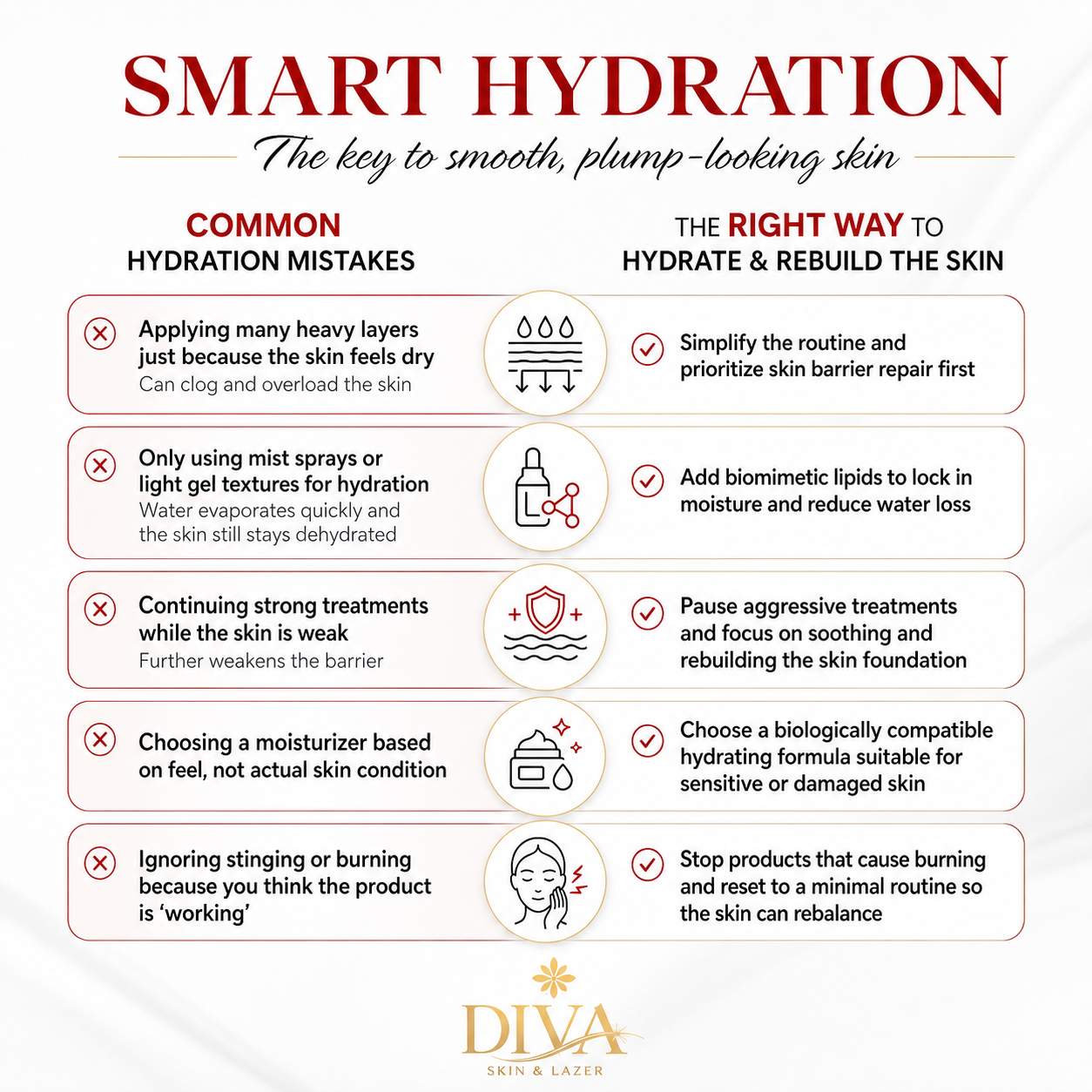
Night-shift workers often stay in air-conditioned rooms for many hours and then move outdoors into heat. The skin may become dehydrated while the surface remains oily. When clients see oil, they may use stronger cleansers, acid toners, or more oil-control products. This can leave the skin drier, sting more, and become more sensitive.
When the skin barrier is weakened, an acne routine that was previously suitable can become too strong. This is why DIVA does not look only at the number of acne lesions, but also assesses sensitivity, dehydration, and the skin’s tolerance of active ingredients.
- Acne treatment cannot be separated from the daily routine
A treatment plan at a clinic can help reduce congestion, control inflammation, or improve the skin surface. However, if clients continue to sleep irregularly, squeeze acne themselves, and change products frequently, results may not be stable.
This does not mean that a clinic has the right to place all responsibility on the client. The practitioner needs to build a plan that fits real life. A person working night shifts is unlikely to maintain a ten-step routine every day. They need concise guidance that is easy to follow and has clear priorities.
- Ordinary acne needs to be distinguished from conditions that require medical assessment
Not every acne flare-up is related only to lifestyle. Severe inflammatory acne, rapidly spreading acne, scarring, menstrual irregularities, hair loss, unexplained weight gain, or other health signs may need medical evaluation.
An aesthetic clinic should not attempt to manage every case with facial treatments, peels, or laser. When signs appear to be outside the clinic’s scope of support, referring clients to an appropriate medical provider is part of professional responsibility.
DIVA’s Perspective
DIVA does not treat “working night shifts” as a diagnosis. It is only one factor that needs to be discussed during assessment. Two people working the same night shifts can have completely different conditions: one may mainly have congestion and oiliness, while another may be irritated from using too many acne products.
The first session should focus on identifying the main concern, checking the products currently in use, and selecting an option that fits the skin’s current recovery capacity. Some people need inflammation control. Some need skin-barrier recovery. Others may be able to begin with a peel, mesotherapy, Pico, or another supportive method after assessment.
Conclusion
Current research does not allow us to say that sleep deprivation or stress is the only cause of acne. However, they can contribute to acne being harder to stabilise, especially when combined with air conditioning, irregular eating, and unsuitable skincare.
For night-shift clients in Poipet, effective treatment is not only about addressing the visible acne lesions. It requires building a realistic plan, reducing factors that overload the skin, and keeping care simple enough for the client to follow over time.
Reference: Studies and reviews indexed on PubMed concerning acne, stress, sleep, and circadian rhythm. This content is educational and does not replace medical diagnosis.

Research & Aesthetic Updates
DIVA Skin Clinic Poipet only publishes research, technology and safety updates when the information is genuinely useful
Open→
Technology Update — How Do Pico, CO₂ Fractional, and RF Microneedling Differ?
Technology Update — How Do Pico, CO₂ Fractional, and RF Microneedling Differ? Practical guidance and realistic next step
Open→
Safety Guidance — When Should Laser, Peel, or RF Microneedling Be Postponed?
Safety Guidance — When Should Laser, Peel, or RF Microneedling Be Postponed? DIVA Poipet explains The skin is unusually
Open→
Warning — What Risks Can Low-Cost Botox, Filler, and Products of Unclear Origin Create?
Warning — What Risks Can Low-Cost Botox, Filler, and Products of Unclear Origin Create? Practical guidance and realistic
Open→