Why do clients choose treatment methods as if they were choosing food from a menu?
Why do clients choose treatment methods as if they were choosing food from a menu? Practical guidance and realistic next steps from DIVA Skin Clinic Poipet.

A very common situation in the aesthetic industry is that clients arrive at a clinic and clearly state the service they want: “I want Pico,” “I want CO₂,” “I want a skin booster,” or “I want a peel like my friend had.”
This way of choosing is rather like looking at a menu and selecting a dish. Clients read the service name, look at advertising images, check the price, and decide what they want to have done.
This is understandable because most social-media content is built around individual services. However, skin treatment is not like choosing a dish. A client may like the name of a method, but that method may not be suitable for their skin condition, goal, or current timing.
- Social media makes clients remember device names more than their skin concern
Every day, clients see many advertisements: Pico for melasma and brightening, CO₂ for scars and pores, HIFU for lifting, skin boosters for a dewy appearance, mesotherapy for acne, and peels for cleansing and skin renewal.
After a while, clients begin to remember the technology names. When they have a concern, they do not ask, “What problem does my skin have?” They ask, “Do you have that machine here?”
Devices become products to choose from, while the skin condition is treated as a secondary factor.
- Before-and-after images can create the impression that everyone is suitable
A beautiful result image can make clients think that if they receive the same service, they will get a similar result.
But two people with the same outward appearance may not have the same cause. For acne scars, one person may mainly have superficial scars, while another has ice-pick scars, boxcar scars, or deep tethered scars. For melasma, the degree and depth of pigmentation, skin condition, and risk of recurrence can differ greatly.
Advertising images only show the result of one particular case. They cannot replace an in-person assessment.
- Clients often choose services by price
When providers publicly list many price levels, clients can easily compare individual services as if they were dishes on a menu.
Where is Pico cheaper? How much is CO₂ per session? How many millilitres of skin booster are used? How many HIFU shots are included?
Price needs to be clear, but comparing only by service name can cause clients to overlook whether the skin is suitable, the treatment level, the specific product and device, the practitioner's experience, the aftercare process, and how unusual skin reactions would be handled.
Two places may both say “Pico laser,” but the goal, settings, and treatment combination can be completely different.

- Clients want control because they are afraid of being sold more
Many clients choose a service themselves because they have previously experienced excessive consultation. They worry that, when they visit, they will be advised to add more methods, purchase a treatment package, or buy products.
For this reason, clients decide on one service in advance and only want that exact service.
This concern is completely understandable. However, when clients insist on their initial choice even though the method is unsuitable, the practitioner faces a difficult situation: following the client's request may lead to a poor result, while explaining too much may make the client feel that additional services are being sold.
The solution is not to force clients to buy more. It is to clarify the goal, select an appropriate treatment level, and confirm the price before treatment.
- One concern may need several approaches
Not every condition has one single method.
Large pores may be related to oil production, congestion, dehydration, superficial scars, ageing, or a rough skin surface.
If congestion is the main cause, cleansing, peels, or oil control may be more important. If texture and superficial scars are the issue, Pico, RF microneedling, or CO₂ may be considered. If the skin is weakened, recovery is needed first.
The same request to “reduce pores” cannot be approached in the same way for every client.
- A suitable method today may not be suitable at the next visit
Skin condition changes through different stages. At the first session, the skin may be inflamed and require gentle treatment and stabilisation. Later, once the skin is stronger, a deeper method may be introduced.
If a client holds to the idea that one technology must be used at every session, the treatment plan loses flexibility.
Skin treatment needs to be adjusted according to the actual response, not only according to the original treatment name.
- A practitioner cannot promise results for an unsuitable choice
Clients have the right to choose their service and budget. However, the practitioner also has responsibility for suitability and safety.
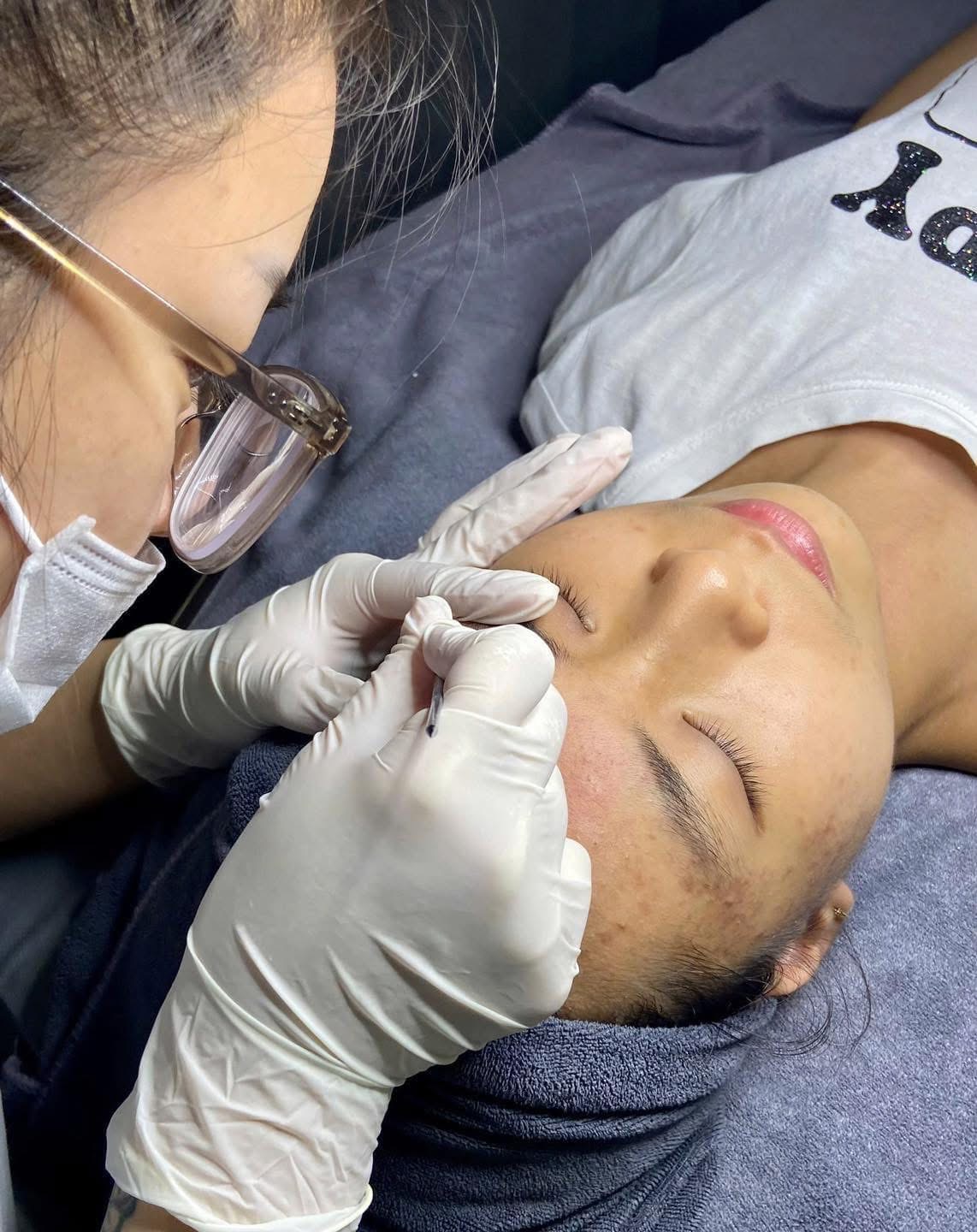
If a client requests an unsuitable method, the practitioner should not perform it simply because the client has decided. Declining it or recommending another option is not an attempt to sell more; it is a way to avoid performing a service that is unlikely to achieve the goal.
Conversely, practitioners should avoid turning consultation into an overly long lecture. Clients only need to understand three things: what the skin's main issue is, which method is suitable at this time, and what the cost and expected result are.
DIVA's Perspective
At DIVA, clients do not need to choose a machine themselves.
They only need to explain the concern they want to improve, their desired level of result, their ability to take downtime, the budget they can use, and whether they want to begin with one session.
After assessing the skin, DIVA selects an appropriate method within the agreed service level. This may be a peel, Pico, CO₂, RF microneedling, mesotherapy, recovery care, or a necessary combination.
The price should be stated clearly before treatment. Clients are not required to purchase a long package. However, the final method should not be selected only from a service name the client saw online.
Conclusion
Clients choosing treatment methods as if they were choosing food from a menu is the result of how the market promotes services: each device is a product, and each technology is an independent choice.
But skin does not work according to a menu. A good method only has value when it is used for the right condition, at the right time, and for the right goal.
Clients should be able to choose their needs, budget, and treatment level. Practitioners need to take responsibility for selecting the appropriate method after assessment.
When these two roles are clearly separated, consultation becomes simpler, clients do not feel pressured to buy more, and treatment results have a better chance of becoming stable.

DIVA Insights & Poipet Skin Trends
Observations from DIVA Skin Clinic Poipet on how climate, border-town lifestyle, night-shift work and cross-border clien
Open→
Why do many people start developing acne after living in Poipet for a while?
Why do many people start developing acne after living in Poipet for a while? DIVA Poipet explains Night-shift work and i
Open→
Why does the skin keep getting worse despite using many products?
Why does the skin keep getting worse despite using many products? DIVA Poipet explains A product that suited the skin an
Open→
Why does the skin still not improve after treatment at many different places?
Why does the skin still not improve after treatment at many different places? Practical guidance and realistic next step
Open→