Breakouts After a Peel: Purging or Irritation?
Breakouts After a Peel: Purging or Irritation? DIVA Poipet explains When Could It Be Related to and Signs Suggesting Irritation.

Introduction
After a peel, some clients develop more noticeable closed comedones, small inflammatory lesions, or many tiny bumps. A common explanation is that skin is purging, but this term is often used to justify every reaction. A peel can make existing congestion surface more quickly, but it can also cause irritation, folliculitis, or a reaction to aftercare products. Distinguishing these possibilities requires looking at the location, type of lesion, sensation, and timing of onset.
When Could It Be Related to Existing Congestion?
If lesions appear in areas that commonly have closed comedones, look similar to previous flare-ups, and are not accompanied by spreading burning redness, existing congestion may be becoming more noticeable. However, this does not mean that more breakouts are better. DIVA still needs to assess whether the peel suits the underlying skin and routine. A severe increase in inflammatory acne should not be considered evidence that the peel is working strongly.
Signs Suggesting Irritation
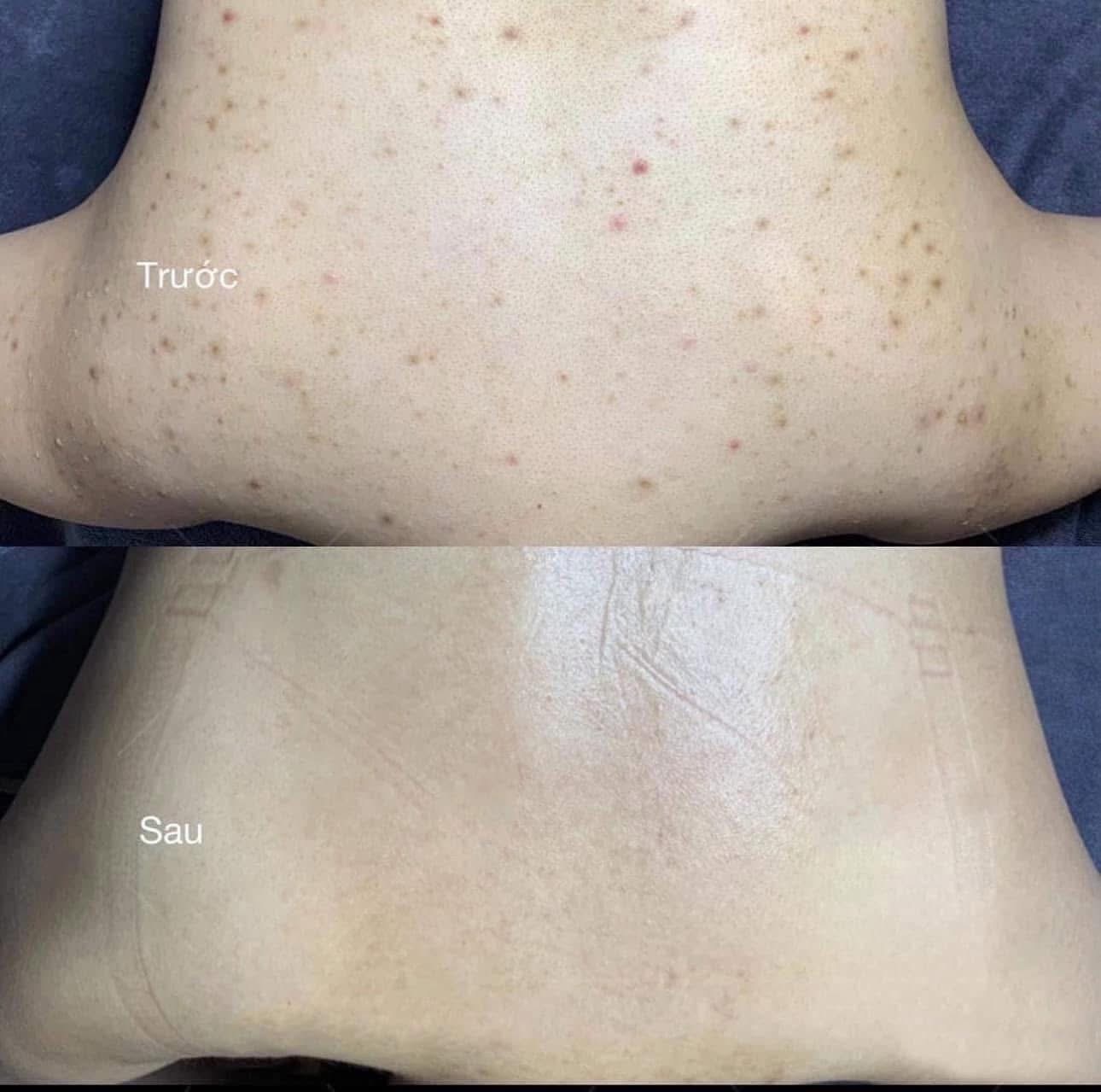
Many uniform tiny bumps appearing in an area that did not previously have acne, together with burning, itching, redness, or dry tightness, may relate to irritation. If bumps flare after using a cream that is too heavy, a new serum, a mask, or makeup too early, the post-peel products need review. Irritation can damage the skin barrier and worsen inflammatory acne, so continuing acids or retinoids to speed things up is often the wrong choice.
Folliculitis and Infection
Uniform pustules around follicles may be folliculitis, especially when there is sweat, friction, or occlusive products. If bumps are painful, hot, spread quickly, have discharge, or occur with fever, infection risk needs assessment. Do not self-extract or use topical antibiotics based on online advice. Incorrect treatment can change the appearance of lesions and make assessment more difficult.
What Does DIVA Need to Know?
Clients should send pre-peel photos if available, current photos, when bumps appeared, their distribution, the level of itch or burning, and a list of products used. DIVA also needs to know whether clients use retinoids, acids, acne medication, or have recently had extractions. Based on the data, the plan may be monitoring, simplifying the routine, pausing treatment, or referral for medical assessment. There is no single correct answer for every breakout after a peel.
How to Avoid Making the Condition Worse
Do not self-increase the frequency of peels, exfoliate, or use many treatments at once. Keep the routine simple, limit friction, and keep objects that touch the face clean. When skin is inflamed, the first goal is to reduce stimulation and identify the cause, not to try to dry out every lesion. The next treatment session should be decided only after skin has been reassessed.
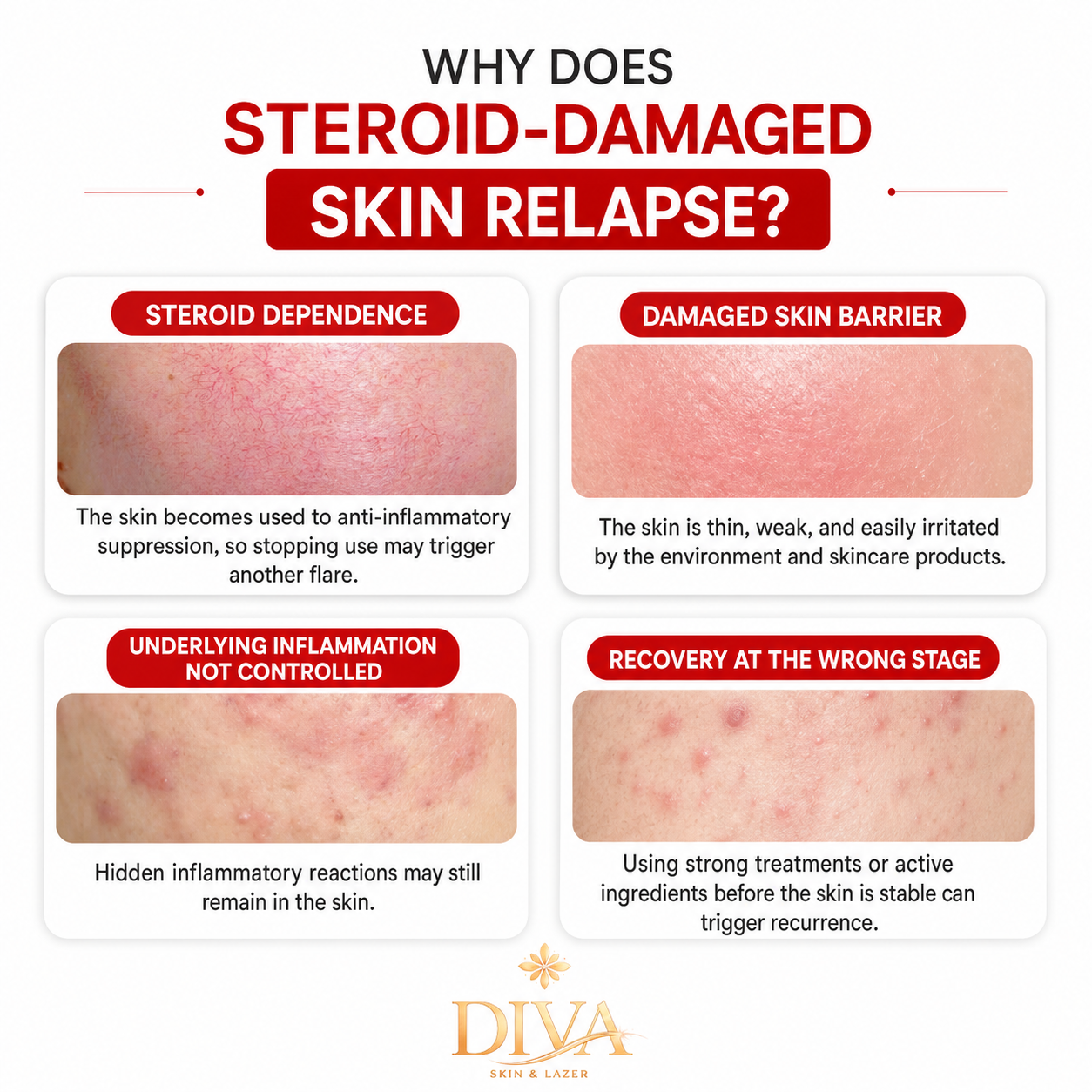
One Reaction May Have Multiple Causes at the Same Time
Skin with existing congestion may also be irritated by a post-peel routine. Therefore, it is not always necessary to choose only one label: purging or irritation. DIVA may need to prioritise inflammation and barrier management first, then return to congestion control. Trying to dry acne immediately while skin is burning often worsens both issues.
Why It Should Not Be Managed Based Only on the Lesion Name
Two clients may both say they developed acne after a peel, but one may have existing congestion while the other has an itchy product-related rash. If only the word “acne” is heard and the same treatment is recommended for both, one person may worsen. DIVA needs to examine the entire skin area and ask about sensation, timing, and routine. Correct classification may sometimes require pausing all active ingredients for a few days to observe how the baseline reaction changes before deciding the next step.
Monitoring the Location Helps Classification
Breakouts in familiar areas have a different meaning from a fine rash covering the entire peel area. Lesions around the mouth, eyes, or hairline may be related to products, masks, or hair. Clients should take photos of the full face, not only one lesion, so DIVA can see the distribution pattern.
Limits of Online Guidance
This content is intended to help clients recognise and communicate more effectively after treatment; it does not replace direct medical diagnosis or management. DIVA does not encourage clients to self-medicate, self-puncture or extract, self-neutralise, or undergo further procedures before the cause is identified. Final guidance must be based on the service performed, products used, location, timing, and each person’s health condition.
Conclusion
Breakouts after a peel may be related to existing congestion, but they may also be irritation, folliculitis, or infection. The term “purging” should not be used to dismiss every reaction. Report early, do not self-extract, and do not add strong active ingredients. Increasing pain, spreading hot redness, significant pus, or fever are signs needing in-person assessment.
Treatment Guides & Aftercare
A full DIVA library: how to prepare before Pico, CO2, peel, RF, Botox and filler; how to care for skin afterwards; and h
Open→
Before Pico Laser
Before Pico Laser. DIVA Poipet explains Provide complete history and Do not self-increase active.
Open→
Before CO₂ Fractional
Before CO₂ Fractional. DIVA Poipet explains Provide complete history and Do not self-increase active.
Open→
Before a Peel
Before a Peel. DIVA Poipet explains Provide complete history and Do not self-increase active.
Open→