How Does Treating a Root Cause Differ from Treating a Visible Symptom?
How Does Treating a Root Cause Differ from Treating a Visible Symptom? DIVA Poipet explains Suggested URL and Understanding the concept.

Introduction
Clients commonly come to DIVA because of a visible sign: acne, dark marks, redness, dullness, or a rough surface. Treating the sign can help skin look better quickly, but if maintaining factors remain, the concern can easily recur. Conversely, speaking only about causes without helping improve what clients currently see does not meet a real need. A good plan needs to distinguish and connect both parts.
Understanding the concept correctly
Treating a visible symptom targets the current sign, such as reducing inflammation, cleansing congestion, affecting pigmentation, or improving the surface. Treating causes focuses on factors making the concern appear or recur: unsuitable products, friction, habits, a weakened barrier, hormonal factors, or disease. A single cause cannot always be found, so promises of treating “the root cause” in an absolute sense should be avoided.
Why is this important?
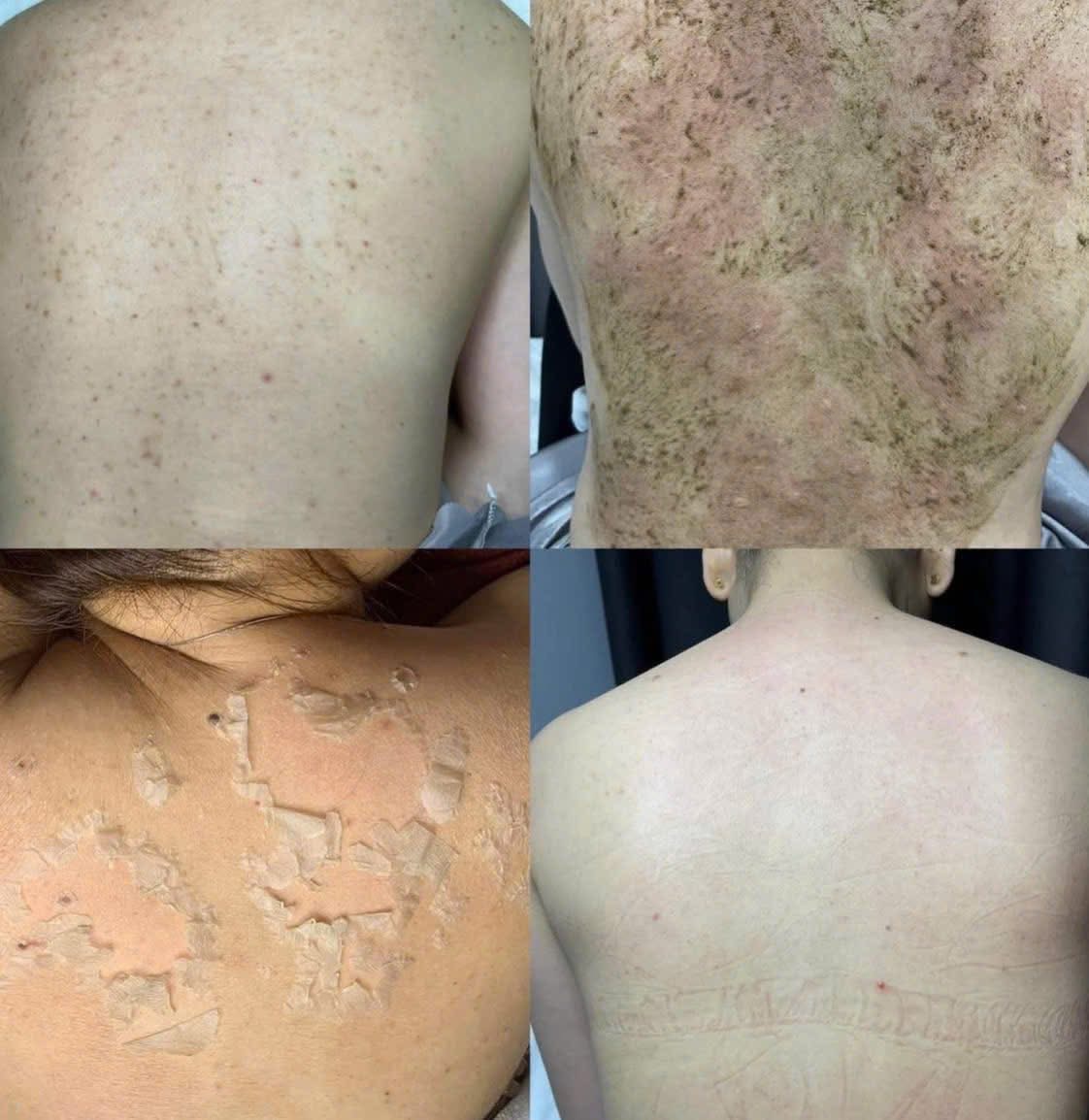
Back acne can be cleansed and inflammation reduced, but sweat, non-breathable clothing, hair products, and folliculitis may still maintain the condition. Dark marks can be affected by laser or peel, but new inflammation continues to create pigmentation. Stable results therefore commonly need both management of signs and reduction of controllable factors.
Four principles DIVA uses
Do not attribute every concern to one cause: Skin is affected by many factors. Simple explanations such as saying everything is caused by toxins or one hormone alone commonly lack sufficient basis.
Prioritise controllable factors: Routine, friction, care methods, timing of intervention, and self-combining products are parts that can be adjusted directly.
Visible signs still need management: Clients should not be made to wait for causes to completely disappear before improving current acne, dark marks, or discomfort.
Follow recurrence to test hypotheses: If a concern returns in a pattern, that data helps DIVA understand maintaining factors better and adjust the plan.
How DIVA applies this in practice
DIVA does not use the concept of root-cause treatment as an absolute promise. Instead, DIVA identifies which parts can be addressed in the clinic, which require home care, which depend on habits, and which need medical assessment. This division is more practical and transparent.

Common misunderstandings and mistakes
Common mistakes are treating only current acne lesions, brightening dark marks without controlling inflammation, or changing products continuously to find one single cause. Some clients instead overlook symptom improvement because they focus only on tests or factors that cannot be changed immediately.
How clients need to cooperate
Clients should provide history of onset, location, times when the condition is worse, products, medication, and relevant lifestyle changes. They do not need to self-diagnose the cause, but specific data helps DIVA distinguish a random factor from a recurring pattern. When a cause outside aesthetic scope is suspected, clients need guidance to seek assessment.
Limits that need to be clear
Many skin conditions do not have one single cause and cannot be controlled completely. Treatment may reduce severity, extend the stable period, and improve skin quality, but recurrence risk can remain. A promise of a complete cure commonly overlooks this multifactorial nature.
What to remember during follow-up
Clients also need to distinguish between changes that are visible immediately and changes that need time to accumulate. Hydration, plumpness, or a smoother feeling may improve early, while baseline inflammation, pigmentation, or structure needs longer. DIVA needs to explain this so that an immediate effect is not mistaken for a final result and a slow stage is not mistaken for failure.
Recording images, sensations, and products in use is a simple but valuable step. Photos should be taken under similar lighting, without filters, and without changing angles too much. Consistent data helps DIVA assess trends rather than depend on memory or the emotion of one particular day.
Conclusion
Treating visible signs helps address what clients currently see; treating maintaining factors helps results recur less often. DIVA combines these two perspectives but does not turn the concept of causes into advertising that promises a complete cure. The objective is better control through the parts that can be controlled.
DIVA Treatment System & Philosophy
How DIVA Skin Clinic Poipet thinks about treatment: a phased system, choosing technology by concern and depth rather tha
Open→
Treatment at DIVA Does Not Take Place Only in the Clinic
Treatment at DIVA Does Not Take Place Only in the Clinic. DIVA Poipet explains Home care protects results and Treatment
Open→
Why Does DIVA Use Only Two Home-Care Systems?
Why Does DIVA Use Only Two Home-Care Systems? DIVA Poipet explains Suggested URL and Understanding the concept.
Open→
What Are Foundation Products, Treatment Products, and Support Products?
What Are Foundation Products, Treatment Products, and Support Products? DIVA Poipet explains Suggested URL and Understan
Open→